Tracking That Finally Makes Your Ads and Content Make Sense
Learn tracking that turns ad and content data into clear insights, helping you improve performance with confidence.
The funnel basics that turn attention into sales, with simple steps to guide people from interest to action.
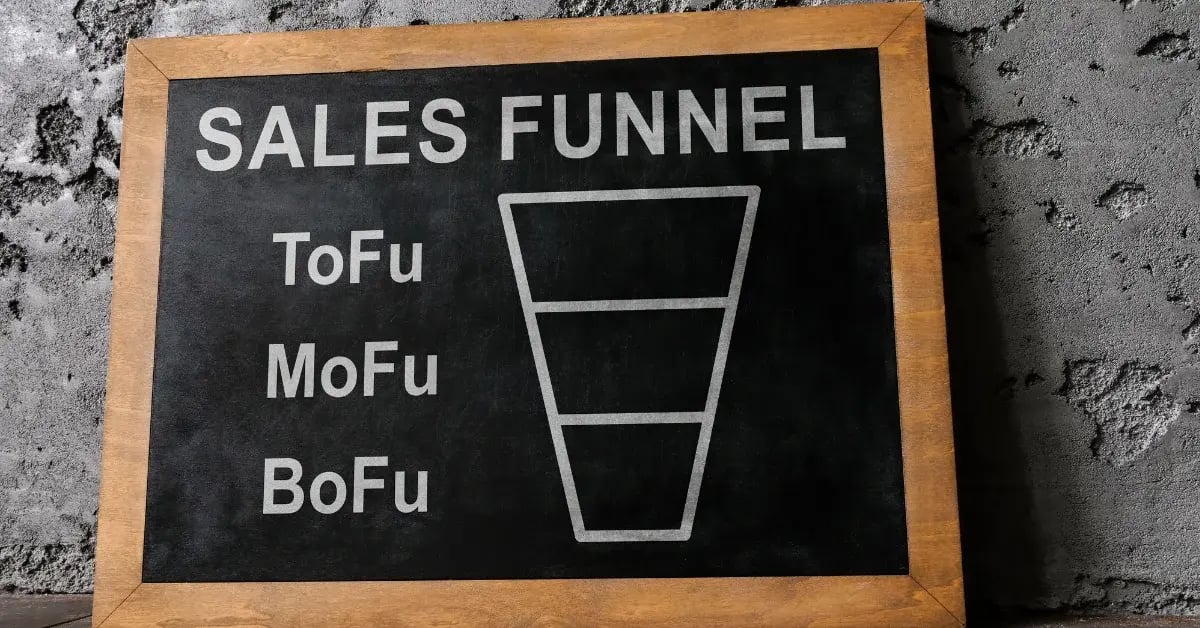
Most people think of marketing as "get more traffic" or "run more ads."
That's not wrong. But it's incomplete.
Traffic without a funnel is just noise. Ads without a system to move people from "who are you?" to "take my money" are just burning budget.
A funnel is the path someone takes from first hearing about you to actually converting. And if you don't understand how that path works, you're going to waste a lot of time and money.
Let me break this down in a way that actually makes sense.

A funnel is just the stages someone goes through before they buy, sign up, or donate.
Here's the simplest version:
Awareness → They learn you exist
Consideration → They decide if you're worth paying attention to
Conversion → They take action (buy, sign up, donate, book a call)
Follow-up → You stay in touch so they come back or refer others
That's it. Four stages. Every marketing funnel is some version of this.
The mistake most people make is treating every stage the same. They run one ad to cold audiences, asking for a sale. Or they post content that's great for awareness but never moves people toward conversion.
Each stage needs different content, different messaging, and different expectations.
Let me walk through what belongs at each stage and how organic content and paid ads fit in.
Awareness is the top of the funnel. This is where people first discover you exist.
They don't know you. They don't trust you. They might not even know they have the problem you solve.
Your goal here isn't to sell. It's to get attention and plant a seed.
Organic content:
Example for a freelance digital marketing consultant:
"Three reasons your Facebook ads aren't converting (and it's probably not the creative)"
Example for an NGO running brand awareness campaigns:
"What happens when a kid doesn't have school supplies? We tracked 200 students for 6 months. Here's what we found."
Paid ads:
At this stage, you're running ads to cold audiences. People who've never heard of you.
Your ad isn't asking for a sale. It's asking for attention. A video view. A post engagement. A page visit.
I usually run video ads or carousel ads that educate or tell a story. The call-to-action is soft: "Learn more" or "See how this works" not "Buy now."
For an NGO digital strategy, awareness ads might be impact stories, short documentaries, or data-driven posts that show the scale of the problem you're solving.
The goal is simple: get people to stop scrolling and actually pay attention for 10 seconds.
That's it. You're not closing deals at the awareness stage. You're just introducing yourself.

A lot of businesses, especially small ones, want to skip straight to conversion. "Why would I pay for someone just to watch a video? I need leads!"
I get it. But here's the thing: cold audiences don't convert well. If someone's never heard of you and you immediately ask them to buy, they're going to scroll past.
Awareness content warms them up. It makes the next stage—consideration—way more effective.
When I'm building: getting the strategy straight first, I always map out what the awareness content will be before I even think about conversion ads. Because if you skip this, your funnel starts cold, and cold funnels are expensive.
Consideration is where people decide if you're the right fit.
They've heard of you (awareness worked). Now they're evaluating. They're comparing you to other options. They're reading reviews, checking your website, and looking at your content.
This is the stage where trust is built or lost.

Organic content:
This is the stuff I covered in posts that do more than get likes. Content that pre-sells and handles objections lives here.
Example for a service business:
"Here's exactly what happens when you hire me: Week 1, we audit your current setup, Week 2, we build the new campaign structure, Week 3, we launch and optimise."
Example for an NGO:
"Here's where your $50 donation actually goes: $35 to supplies, $10 to distribution, $5 to monitoring and impact tracking."
Paid ads:
At this stage, you're retargeting warm audiences. People who watched your awareness video, visited your website, or engaged with your posts.
Your ad is more direct now. You're showing proof. You're making an offer. You're asking them to take a small next step.
For a consultant, that might be "Download my free campaign audit checklist" or "Book a 15-minute strategy call."
For an NGO, it might be "See the impact of one donation" or "Sign up for our monthly newsletter to see where your support goes."
You're not asking for the whole sale yet (usually). You're asking for a micro-commitment. An email. A call. A sign-up.
This stage is where Meta retargeting ads really shine. You're targeting people who already know you, so your cost per result drops significantly compared to cold audiences.
I see this constantly. People get traffic to their site (awareness worked), but then nothing happens.
Why? Because there's no consideration content. The website doesn't answer objections. There's no proof. No testimonials. No explanation of how it works.
Someone lands on your site, looks around for 30 seconds, doesn't find what they need to trust you, and leaves.
Fix this by making sure your website and your retargeting content clearly answer:
Answer those questions in your content, and consideration becomes way easier.
Conversion is where someone takes the action you want. They buy. They book. They donate. They sign up.
This is the stage everyone obsesses over. And yes, it matters. But if awareness and consideration are weak, conversion will struggle no matter how good your offer is.

Organic content:
Honestly, organic content doesn't close deals that often. It can, but usually by this stage, people are ready to act because of everything that came before.
That said, some organic conversion tactics:
Paid ads:
This is where conversion-optimised ads come in. You're targeting the warmest audiences, people who've visited your pricing page, added to cart but didn't buy, or watched 75% of your consideration video.
Your ad is direct. Clear offer. Clear CTA. Apparent urgency or value prop.
Example for a freelance digital marketing consultant:
"Ready to stop wasting ad budget? Book your strategy session this week, and I'll audit your current campaigns for free."
Example for an NGO:
"Your $100 donation today gets matched. Double the impact, but only until Friday."
At this stage, you're also optimising your landing pages for fast load time. Clear headline. One clear CTA. No distractions.
I use tools like Microsoft Clarity to watch session recordings and see where people drop off on landing pages. If everyone's scrolling to the form but not submitting, the form is the problem. If they're bouncing immediately, the issue is the headline or load time.
The conversion stage is also where tracking becomes critical. You need to know precisely how many people are converting and at what cost. If you're not tracking this correctly, check the tracking setup I trust because flying blind at the conversion stage is expensive.
The biggest mistake I see is asking for conversion before someone's ready.
You ran one awareness ad and are retargeting them with a "buy now" message 24 hours later. That's too fast for most people.
Some products or offers convert fast. Impulse buys, low-ticket items. Urgent needs.
But most services, high-ticket offers, and nonprofit donations need time. People need to see your content multiple times, visit your site a few times, think about it, maybe even talk to someone else, before they're ready.
Don't rush it. Let the funnel breathe.
A good rule of thumb: someone should see your brand 3-7 times before you ask them to convert. That might be two organic posts, one awareness ad, two consideration ads, then a conversion ask.
Give people time to trust you.
Most people think the funnel ends at conversion. It doesn't.
Follow-up is what happens after someone converts. It's how you turn one-time buyers into repeat customers, or one-time donors into monthly supporters.
Email sequences:
This is the easiest follow-up channel. Someone buys or signs up, and they go into an email sequence.
For a service business, that might be:
For an NGO, it might be:
You can set this up in Mailchimp or any basic email tool. It doesn't need to be fancy. It just needs to exist.
Retargeting ads (again):
Yes, you can retarget people who've already converted. Show them related offers, upsells, or referral incentives.
I don't do this for every client, but for businesses with multiple service tiers or NGOs with different campaign focuses, it works well.
Organic content (again):
Keep posting. Your existing customers or donors are still following you. Your content keeps you top of mind, so when they're ready to buy again or donate again, you're the first name they think of.
Follow-up is the least sexy part of the funnel, but it's often the most profitable. Repeat customers are cheaper to convert than new ones. Monthly donors are way more valuable than one-time donors.
Don't skip this stage.
Let me show you what this looks like for a freelance consultant selling website audits.
Awareness:
Organic post on LinkedIn: "5 things I check in every website audit (most businesses miss #3)"
Paid ad to a cold audience: Short video explaining why websites lose leads
Goal: Get people to know I exist and that website audits are a thing
Consideration:
Organic post: "Here's what happens in a website audit: I check load speed, mobile experience, form functionality, CTA clarity, and tracking setup. Takes about 2 hours. You get a 10-page report."
Paid retargeting ad: Carousel showing before/after examples from past audits
Goal: Build trust, show proof, explain the process
Conversion:
Paid ad to warm audience (people who've visited my services page): "Book your website audit this week. $500, delivered in 3 business days. Limited to 5 clients per month."
Landing page with testimonials, FAQ, and booking calendar
Goal: Get people to book
Follow-up:
Email sequence after audit is delivered: Check-in email, case study request, referral ask, upsell to ongoing consulting.
Goal: Turn one-time clients into repeat customers or referrals
That's the whole funnel. Four stages, organic + paid working together, each stage moving people closer to the goal.

Now let's do the same for an NGO running brand-awareness campaigns to drive donations for clean-water projects.
Awareness:
Organic post on Instagram: Video showing the daily walk families make to get water (no ask, just storytelling)
Paid ad to cold audience: "2 billion people don't have access to clean water. Here's what that actually looks like." (Video ad, goal is views)
Goal: Make people aware of the problem
Consideration:
Organic post: "Here's where your donation goes: $50 funds a water filter, $200 funds a well repair, $500 funds a new well. Every dollar is tracked."
Paid retargeting ad: Testimonial from a village that received a well, showing before/after
Goal: Build trust and show impact
Conversion:
Paid ad to warm audience: "Your $50 donation gets matched this week. Double your impact, but only until Sunday."
Landing page with donation form, impact calculator, and past project photos
Goal: Get donations
Follow-up:
Email series: Thank you + impact update → project progress update → invitation to become a monthly donor
Retargeting ad (optional): "Become a monthly donor and fund clean water every month, not just once"
Goal: Turn one-time donors into recurring supporters
Same structure. Different offer. Same funnel logic.
When I'm working on an ngo digital strategy, this is the framework I use every time. It's simple, it's repeatable, and it works.
Let's talk about the most common problem: your ads are getting clicks, but nothing's converting.
Here's what to check.
Literally broken. The form doesn't work. The page loads slowly. It looks terrible on mobile.
Use Microsoft Clarity or Hotjar to watch session recordings. You'll see exactly where people are dropping off.
Common issues:
Fix the page before you spend another dollar on ads.
Your ad says one thing. Your landing page says something else.
Example: Ad says "Free website audit." Landing page says "Book a paid consultation."
That's a mismatch. People clicked because they wanted the free thing. Now you're asking them to pay. They leave.
Make sure your landing page headline and offer exactly match what the ad promised.
Your ad is going to a cold audience and asking them to buy a $2,000 service immediately.
That rarely works. Cold audiences need to warm up first.
Go back to the funnel stages. Are you running awareness content first? Are you retargeting warm audiences? Or are you jumping straight to conversion with people who don't know you?
If it's the latter, fix your funnel. Add an awareness stage. Build a retargeting audience. Then ask for the sale.
Maybe people are converting and you just don't know it because your tracking is broken.
Check your Google Ads conversion tracking or Meta Pixel setup. Make sure events are firing correctly.
Test it yourself. Go through the funnel as if you're a customer. Submit the form. Check if the conversion appears in your dashboard.
If it doesn't, your tracking is broken. Fix it before you assume the funnel isn't working.
This is precisely why [INTERNAL LINK: "tracking each stage of the funnel" → "Tracking that finally makes your ads and content make sense"] is non-negotiable. If you can't see where people are dropping off, you can't fix it.
Sometimes the funnel is fine. The tracking is fine. The page is fine.
The offer just isn't compelling.
Maybe your price is too high. Perhaps the value isn't clear. Maybe your competitors are offering something better.
This is the hardest one to diagnose because it's not technical. It's strategic.
If you've ruled out everything else, go back to [INTERNAL LINK: "the plan I built before I track anything" → "The simple marketing plan that stops you wasting money"] and ask: Is my offer actually solving a painful problem for the right audience?
If the answer is no, the funnel won't save you. You need a better offer.

If you don't have a funnel mapped out yet, here's what to do this week:
Write down the four stages: awareness, consideration, conversion, and follow-up, and list what content or ads you're currently running at each stage.
Most people will realise they're only doing one or two stages, usually awareness and conversion, with nothing in between.
That's your gap. Fill it.
Create consideration content. Build a retargeting audience. Add a follow-up email sequence.
Once you've got content at all four stages, the funnel starts working.
And if you're already running a funnel but you're not sure if it's actually performing, the next step is reporting by funnel stage. You need to know which stage is working and which stage is broken so you can fix it.
Funnels aren't complicated. They're just intentional.
Stop running random ads and hoping for the best. Map the journey. Build content for each stage. Track what's working.
That's how attention turns into sales.
Learn tracking that turns ad and content data into clear insights, helping you improve performance with confidence.
Learn how to create reports clients actually understand and trust, with clear takeaways and real meaning behind the data.
A practical guide on what to post when you want leads, not likes, with content ideas that drive real action.